
The Fight Isn’t the Problem. What Comes After Is.
How to manage conflict in relationships in a way that helps, not hurts.
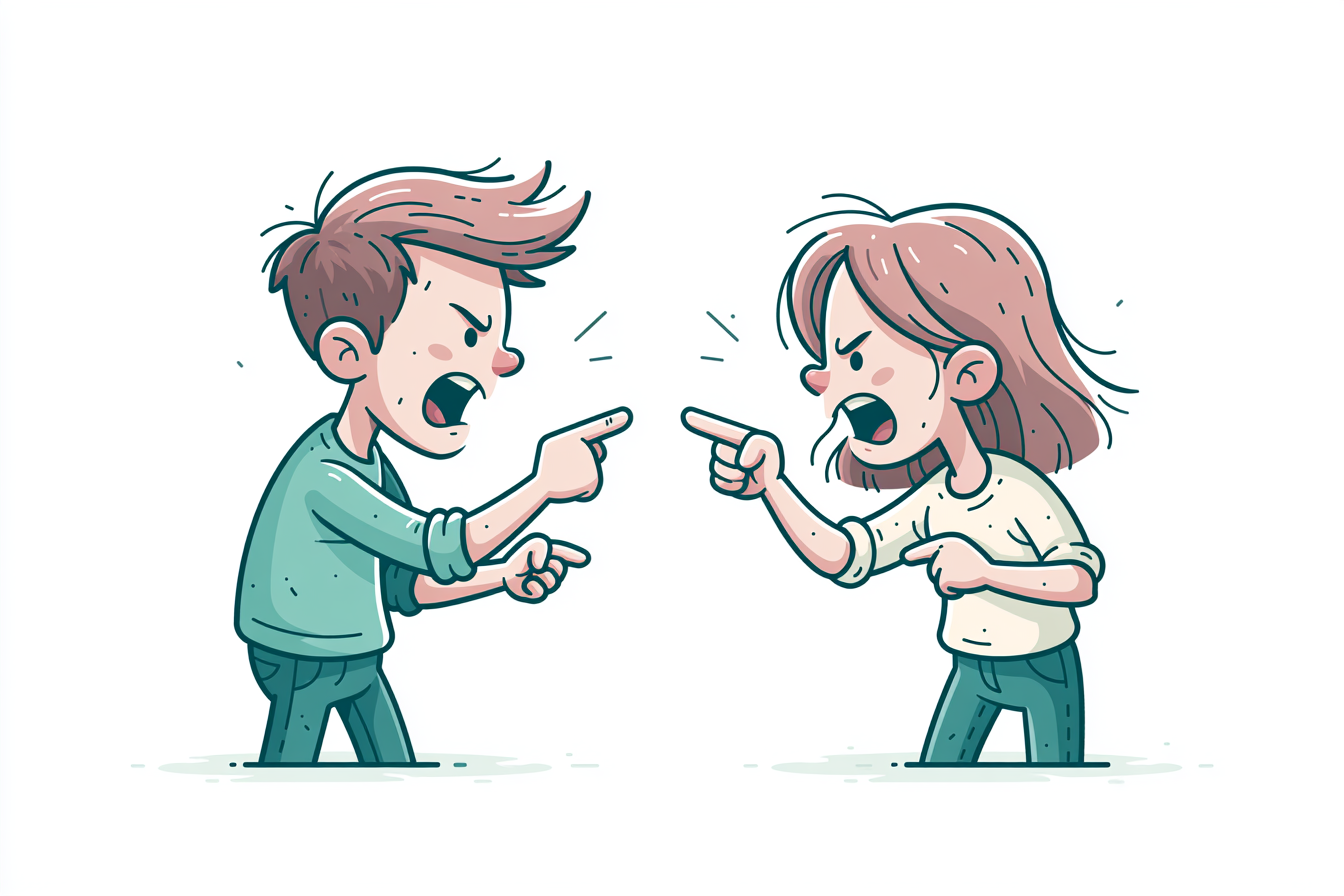
I have sat with a lot of couples in the therapy space over the years. And almost every single one of them came in saying some version of the same thing: “We fight too much.”
I understand why they believe that. It makes intuitive sense. Conflict hurts. Conflict is loud and exhausting and often leaves both people feeling worse than before it started. So the obvious conclusion is that the fighting is the problem, and the solution is to fight less.
Four decades of rigorous research says that’s the wrong conclusion.
Not slightly wrong. Fundamentally wrong.
Conflict is not the enemy of a healthy relationship. The absence of repair is.
What the Gottmans Found
John and Julie Gottman, who are widely considered the foremost experts on relationship dynamics in the US, spent more than four decades studying thousands of couples in a research environment they literally called the “Love Lab” – an instrumented apartment where couples had real conversations while researchers tracked everything from their words to their heart rate and skin conductance. What they found upended virtually everything we thought we knew about relationships.
The couples who stayed together and thrived were not the ones who argued less. They argued just as much. What separated them from the couples who eventually divorced or became chronically miserable was not the presence or absence of conflict. It was the ratio of positive to negative interactions – and, crucially, a specific behavior the Gottmans came to call the “repair attempt.”
Gottman defined a repair attempt as “any statement or action – silly or otherwise – that prevents negativity from escalating out of control.” The definition is deliberately broad. A repair attempt might be a sincere apology. It might be a shared inside joke that breaks the tension. It might be a soft touch on the arm, or someone saying “can we start over?” In thriving couples, these attempts are made early and often – and they’re accepted.
KEY POINT
The Gottmans’ research found that stable, happy couples maintain a ratio of roughly five positive interactions for every one negative interaction during conflict. This 5:1 “Magic Ratio” is not achieved by avoiding negativity – it’s achieved by repairing it. Repair attempts were so reliably predictive of relationship health that the Gottmans called them the “secret weapon” of happy couples.
In distressed couples, something different happens. Repair attempts are either absent or, when they do appear, they get rejected. One partner reaches toward the other – with humor, with tenderness, with a bid for de-escalation – and the other partner swats it away. Or ignores it entirely. And over time, the partner who was reaching stops reaching. They learn that repair isn’t safe. They stop trying.
That is how contempt, stonewalling, and the kind of chronic disconnection that precedes the end of a relationship develop. Not because the couple fought. Because the fighting had no exit ramp.
What Conflict Is Actually For
Sue Johnson, the Canadian psychologist who developed Emotionally Focused Therapy, has described love as “a constant process of tuning in, connecting, missing and misreading cues, disconnecting, repairing, and finding deeper connection.” That phrase – “a dance of meeting and parting and finding each other again” – captures something the Gottmans’ data also supports: conflict, when it’s followed by repair, is actually the mechanism through which relationships deepen.
Think about what conflict requires you to do, when you do it well. You have to reveal what matters to you. You have to articulate your hurt or your fear, which means you first have to know what your hurt or your fear is. Your partner has to do the same. And then – if repair happens – both of you have to be witnessed in that vulnerability and respond to it with care.
That is intimacy. Not the absence of friction, but the practice of turning toward each other in the presence of it.
Johnson’s EFT framework maps conflict to what she calls “attachment injuries” – moments where a partner was not there when they were needed, or where a trust was broken. These injuries, if left unaddressed, become the invisible framework that shapes every subsequent conflict. But if they’re repaired – if the injured partner can be heard, and the other partner can genuinely acknowledge the harm and stay present through the repair – the bond often ends up stronger than it was before the injury.
CLINICAL NOTE
The Gottmans’ longitudinal research also found that roughly 69% of conflicts in relationships are what they call “perpetual problems” – rooted in fundamental differences in personality, values, or needs that are never fully resolved. The goal with these conflicts is not resolution. It’s understanding and management with compassion. This is another place where repair – the ongoing practice of acknowledging impact and staying connected – matters more than “winning.”
When Repair Doesn’t Happen: The Slow Erosion of Trust
When repair doesn’t happen, something specific and well-documented occurs. It doesn’t happen all at once. It happens gradually, almost invisibly, like water eroding a stone.
Each unrepaired conflict leaves a residue. A small amount of unresolved resentment, a slight contraction in the sense of safety, a tiny increase in the vigilance one partner has to maintain around the other. The next conflict then starts from that slightly more defended position. And when that one also goes unrepaired, the residue accumulates.
What gets eroded, slowly and reliably, is trust. Not trust in the large declarative sense – “I don’t trust you” – but the smaller, more intimate trust that says: “When I am hurt, you will care. When I am wrong, you can say so without humiliating me. When we collide, we will find our way back to each other.”
When that trust erodes, people stop bringing their real selves to the relationship. They protect. They manage. They act out a version of themselves that’s calculated to avoid conflict, because they’ve learned that when conflict does come, there’s no way out of it. The relationship becomes a place of vigilance rather than rest.
This is what Gottman called “negative sentiment override” – the state where a relationship’s accumulated negativity is so heavy that even neutral or positive gestures get interpreted through a negative lens. Your partner’s joke reads as sarcasm. Their question is interpreted as criticism. Their affection feels like manipulation. The repair attempts that healthy couples use automatically stop working, because the emotional soil they need to take root in has become depleted.
Why We Don’t Repair: The Real Reasons
If repair is this important, and if the research on it is this clear, why don’t more people do it?
I’ve thought about this a lot – both as a therapist and as someone who has navigated the same territory myself. The reasons turn out to be worth naming carefully, because most of them aren’t what people think they are.
Shame versus guilt
Brené Brown, whose research on shame and vulnerability is among the most practically useful work to come out of social psychology in the last two decades, draws a distinction that is essential here. Guilt, she says, is the feeling of “I did something bad.” Shame is the feeling of “I am bad.”
These two experiences look similar from the outside but they lead to completely opposite behaviors. Guilt – when it’s functional – motivates repair. It says: something I did caused harm, and I want to address that. Shame says: the harm I caused reveals that I am fundamentally defective, and the only way to survive that revelation is to avoid it.
When someone refuses to repair, or offers a non-apology apology that is actually blame under disguise (“I’m sorry you feel that way”), it’s often not because they don’t care. It’s because repair has activated shame rather than guilt – and shame, as Brown notes, is much more likely to produce destructive behavior than it is to produce change.
The antidote is learning to experience accountability through guilt rather than shame. To hold the thought: “I hurt someone I love. That tells me something about what I did, not something permanent and damning about who I am.”
Narcissistic injury
June Price Tangney, a social psychologist at George Mason University who has spent decades studying shame and guilt, has found that narcissism is strongly associated with what she calls a particular shame profile: extremely high shame-proneness combined with equally high shame-avoidance. Narcissistic individuals, in this model, are if anything more sensitive to shame than the average person – but because they cannot tolerate it, they convert it almost instantly into something else: rage, contempt, blame, or withdrawal.
This is what’s sometimes called a narcissistic injury – the experience of having one’s idealized self-image threatened by the ordinary imperfections of being human in a relationship. Conflict, mistakes, and repair requests all carry this threat. Being asked to acknowledge harm can land as a catastrophic indictment rather than a normal relational moment.
The person with high narcissistic traits often attacks the requester, minimizes the harm, changes the subject, or launches into a long account of their own grievances. These are not cynical strategies – they’re panic. The self is under siege. Shame, in that internal state, can feel like annihilation.
This is worth understanding – not to excuse it, but because it clarifies what you’re dealing with when repair isn’t forthcoming.
Apology as surrender
A third common block is a belief that apologizing means admitting you were entirely wrong, that your intentions were bad, or that the other person “wins” the argument. In households where conflict was won and lost rather than worked through, this belief can feel like an unexamined truth.
It is not true.
An apology does not require you to agree that your account of events is wrong. It does not require you to concede that your intentions were harmful. What it requires is that you acknowledge the impact of your actions on someone you care about – and that you hold that impact with more importance than the question of who was right.
You can believe you were right about the substance of the disagreement and still say: “The way I said that hurt you, and I’m sorry for that. That wasn’t what I wanted.” Those two things are not in conflict.
Repair was never modeled
For many people – particularly those who grew up in families where conflict ended in either silence or escalation – healthy repair is simply not a behavior they ever saw. They have no template for what it looks like to acknowledge harm, stay present with someone’s distress, and reconnect.
This is especially true for many neurodivergent people, whose early experiences often included repeated misunderstandings with caregivers who didn’t share their communication style, and whose own distress was frequently misread or dismissed. When repair was modeled at all, it may have been perfunctory or conditional. “Fine, I’m sorry, now can we move on” is not repair. It’s conflict termination. And the two feel very different.
The good news is that repair is a skill. It can be learned. It does not require some natural gift for emotional attunement – it requires practice, patience, and a commitment to treating the relationship as something worth the discomfort of growth.
Pride and the zero-sum frame
Pride is the version of shame-avoidance that wears a costume. It presents as strength, but it functions the same way: it refuses vulnerability because vulnerability feels like weakness. In a zero-sum frame – where one person winning means the other person losing – repair is surrender. Acknowledging harm is defeat.
One of the most useful reframes I offer couples is this: the goal of a repair conversation is not for one of you to win. The goal is for the relationship to win. Those are not the same thing, and conflating them is one of the most reliable ways to ensure that neither of you gets what you actually want.
“Good vibes only” – and the spiritual bypass it hides
There is a version of conflict avoidance that doesn’t look like conflict avoidance at all. It looks like positivity. It looks like spiritual practice. It looks, from a distance, like emotional health.
It’s the “good vibes only” orientation – the belief that negative emotions don’t belong in a healthy relationship, that anger, grief, fear, and hurt are problems to be resolved as quickly as possible rather than experiences to be witnessed and worked through. In its milder forms it shows up as a reflexive pivot to the bright side every time something difficult surfaces. In its more entrenched forms, it becomes a rule: we don’t do hard feelings here.
Psychologist John Welwood, who coined the term “spiritual bypass,” described it as the tendency to use spiritual ideas and practices to sidestep unresolved emotional issues, developmental wounds, and unfinished psychological business. The “good vibes only” ethic is often exactly this – a framework that borrows the language of growth and wellness to avoid the uncomfortable work that growth and wellness actually require.
The problem isn’t the aspiration toward positivity. The problem is what gets excluded. When only happy, light, comfortable emotions are allowed, the person who is hurt or angry or afraid learns something quickly: their full inner life is not welcome here. So they hide it. They smile when they’re hurting. They say “I’m fine” when they’re not. They edit themselves into a version that fits the relationship’s emotional dress code.
That is not intimacy. And it forecloses repair entirely, because repair requires first acknowledging that something went wrong – that someone was hurt, that there was a rupture worth addressing. In a “good vibes only” system, naming the rupture is itself the problem. The hurt person becomes the one introducing negativity. The conflict, already uncomfortable, now carries the additional weight of being a violation of the relationship’s norms.
Being a fully realized human being means having the full range of human emotions. Grief and anger and fear and disappointment are not signs that something has gone wrong with you. They are signs that you are alive and that things matter to you. A relationship that can only hold the pleasant parts of that range is a relationship that can only hold part of you.
The antidote is not to cultivate a culture of complaint or relentless processing. It’s to build a relationship where difficult emotions are allowed to exist – where naming them is an act of trust rather than a violation, and where repair is possible precisely because the hurt doesn’t have to be hidden.
What Healthy Repair Actually Looks Like
I want to be practical here, because this is the place where good theory often fails people. They understand – conceptually – that repair matters. What they don’t have is language. So let me offer some.
The structure of a genuine apology
A genuine apology has several components, and understanding them can help when you’re in the middle of a conflict and don’t know what to say.
SCRIPTS YOU CAN STEAL – MAKING A REPAIR
A full repair attempt doesn’t require a script – but having one nearby helps when your nervous system is lit up. Pick the language that fits the situation:
“I can see that what I said (or did) hurt you. That matters to me, and I’m sorry.”
“I don’t fully understand yet what went wrong for you, but I can see that something did, and I want to understand it.”
“I was coming from a place of [frustration / fear / exhaustion], and it came out in a way I didn’t intend. That’s on me.”
“You don’t have to forgive me right now. I just want you to know that I hear you, and I’m not okay with having hurt you.”
“I think I was protecting myself and it came at your expense. I don’t want to do that.”
“I was wrong to [specific behavior]. Not just about tactics – about the impact it had on you.”
Notice what these have in common: they acknowledge impact, they don’t require agreement on intent, and they don’t immediately pivot to the speaker’s own grievances. They are brief enough to allow space for the other person to respond.
Notice also what’s absent: the word “but.” The moment “I’m sorry” is followed by “but,” it stops being an apology and becomes an excuse. Save the “but” for a different conversation – one where you’re working through the underlying disagreement rather than repairing the hurt.
How to listen when you’ve hurt someone
This is often the harder skill. Apologizing, at least, gives you something active to do. Listening when someone is telling you how you hurt them – especially if you see things differently, especially if you feel unfairly characterized, especially if your own hurt is all too active – is an act of real discipline.
Here’s what it requires, and what it doesn’t.
It does not require you to agree with their account of events. Two people can experience the same exchange very differently, and both experiences can be real. You do not have to resolve the factual disagreement to offer care about the emotional one.
It does require you to keep the focus on them, at least for now. The moment you say “well, I was hurt too” or “do you know what it’s like to be on the receiving end of your [whatever]?” you have shifted the conversation from repair into counter-prosecution. Your hurt is real and it deserves a conversation. Not this conversation. Not right now.
SCRIPTS YOU CAN STEAL – LISTENING WITHOUT DEFENSIVENESS
When someone is telling you how you hurt them, your job is to understand their experience, not to defend yours. Try:
“Help me understand what that was like for you. I want to get it right.”
“I’m hearing that when I [specific thing], it felt like [their interpretation]. Is that right?”
“I’m trying not to be defensive right now. I’m not sure I’m fully succeeding, but I want to.” [This one sounds simple. It lands remarkably well.]”
“That’s hard to hear, and I’m going to sit with it. I don’t want to respond until I actually understand it.”
“I can see why it felt that way, even if that’s not what I intended.”
“You don’t have to make me feel better about this right now. I can hold the discomfort of having caused you pain.”
And if things are too activated to continue: “I need a few minutes to settle down so I can actually be here with you. Can we pick this up in [X minutes]?” – and then actually come back.
That last one is important. Taking a break to regulate your nervous system is not avoidance – as long as you come back. Gottman’s research found that once heart rate exceeds about 100 beats per minute, the capacity to listen, empathize, and problem-solve drops precipitously. A 20-minute break before resuming a difficult conversation produces measurably better outcomes than muscling through while flooded.
The key word, though, is “come back.” A break that turns into days of silence is stonewalling, one of the most corrosive patterns Gottman identified.
Take the break. Set a time to return. Return.
A Note on Neurodivergence and Repair
I want to say something specific for the neurodivergent folks reading this – and for the people in relationships with them.
Many autistic and ADHD adults have experienced a lifetime of being told they’re “too much,” emotionally dysregulated, or socially incompetent. Repair can be particularly loaded for us, because our conflicts often carry a history – years of misunderstandings where we genuinely did not understand what we did wrong, or where our distress was read as manipulation, or where the rules kept changing in ways we couldn’t track.
Emotional flooding is often more intense for neurodivergent people, and recovery from it takes longer. This does not mean repair is off the table. It means it may need to look different: more explicit structure, more time, clearer agreements about what “taking a break” means, and a shared understanding that processing takes as long as it takes.
If you are neurotypical and your partner is neurodivergent, please hear this: the blank face in conflict is not indifference. The silence is often not contempt. The “I don’t know why” is not evasion. Many of us are working very hard under the surface and have no road map. Patience, explicit language, and the willingness to return to repair after a longer interval than you’d prefer – those things matter enormously.
The Relationship That Grows Through Conflict
I want to close with the thing I believe most about relationships – the thing that’s kept me doing this work through over a decade in practice, and that has informed my own marriage in ways I couldn’t have anticipated when I started.
Relationships that never experience conflict are often relationships where at least one person has made themselves smaller to keep the peace. The apparent harmony is a kind of deal: I will hide the parts of me that might create friction, and in exchange you won’t have to know them.
That is not intimacy. That is co-management.
Real intimacy requires that you are known – including the parts that are difficult, imperfect, or inconvenient. And being known means that sometimes what you bring into the room will be hard to deal with for someone else. Conflict is the inevitable product of two real people living a real life together.
What makes a relationship healthy is not the absence of those collisions. It’s what you do in the aftermath. The willingness to turn toward instead of away. The ability to say “I hurt you, and that matters to me” without requiring absolution in the same breath. The practice of choosing the relationship over the argument.
That’s repair. And it’s not a gift some people are born with. It’s a skill. One that can be learned. One that is worth learning.
💙 Help shape the book
I’m writing a book for late-identified neurodivergent adults, and I want it grounded in real lived experience – not just mine. If you have a few minutes, I’d love your voice in it.
👉 Contribute to the community survey: https://tally.so/r/7RE8ga
📋 Free guide: “5 Stress Regulation Strategies for Neurodivergent Adults” https://mailchi.mp/thrivingfamilytherapy/stress-guide
